Newsletter Subscribe
Enter your email address below and subscribe to our newsletter
Enter your email address below and subscribe to our newsletter

 BySonu
168.1.10.1 is a private IP pair, but 1921.168.10.1 is not a valid local router address in standard practice. The misprint or misconfiguration can break gateway reachability and complicate ARP and routing table verification. Typical default gateways use 192.168.x.x or 10.x.x.x ranges with consistent subnet masks. Understanding why a typo survives in setup warrants closer inspection of interface status and route paths, and what this implies for dependable network access—questions arise that invite careful scrutiny.
192.168.10.1 is not inherently invalid as a router IP, but its suitability depends on context and addressing schemes. In certain networks, it collides with reserved private ranges or conflicting subnet allocations, rendering it invalid for canonical routing roles. The label invalid IPv4 emerges when duplicate usage or misconfigured masks disrupt reachability within private networks and management planes.
Real default gateway addresses appear in practice as the practical endpoints for inter-network routing on consumer and enterprise networks. These addresses vary by vendor and network design, yet serve as stable ingress/egress points.
Two word discussion ideas illuminate common router quirks, while precise configurations reveal predictable behavior. Understanding these addresses supports freedom in topology choice without sacrificing interoperability or performance, despite occasional quirks.
Determining a device’s true default gateway requires a direct examination of both network configuration and routing state, separating declared defaults from operational paths. The method emphasizes transparency in networking basics and accurate interpretation of device configuration. Cross-check ARP, routing tables, and interface statuses to confirm the gateway’s reachability, ensuring the observed path aligns with documented settings and actual traffic flow.
Quick fixes for typos and misread IPs in setup focus on rapid, reliable correction without altering underlying network design. The discussion targets procedural, non-disruptive adjustments: typo mitigation techniques, verification checks, and consistent labeling. Consider firmware quirks, documented offsets, and incremental fixes. Analysts emphasize repeatable steps, minimal downtime, and clear results to preserve freedom to reconfigure later if needed.
Yes, 192.168.10.1 cannot directly function as an IPv6 router address; IPv6 uses its own addressing and privacy/prefixing standards. In IPv6, private IPs refer to unique-local addresses, while networking standards guide router configurations.
Yes. 192.168.10.1 does not require a fixed subnet mask, but typical use assumes 255.255.255.0; dialect differences and hardware compatibility influence exact mask choices, yet standard practice remains consistent for local networks.
Firewalls influence using 192.168.10.1 by inspecting traffic to the default gateway, potentially introducing misconfigured networks and delaying or blocking access; they may cause default gateway conflicts if rules misalign with subnetting or routing expectations.
As swiftly as a compass needle, yes—some devices cannot use 192.168.10.1 as gateway. The limitation stems from device compatibility and reserved address conflicts, affecting network discovery and routing behavior across diverse hardware landscapes.
Common signs include unreachable gateway, inconsistent DHCP, and conflicting VPN routes, indicating a mistaken router IP. This analysis notes VPN conflicts and device discovery discrepancies as key indicators, guiding users toward corrective reconfiguration with precise, freedom-focused technical rigor.
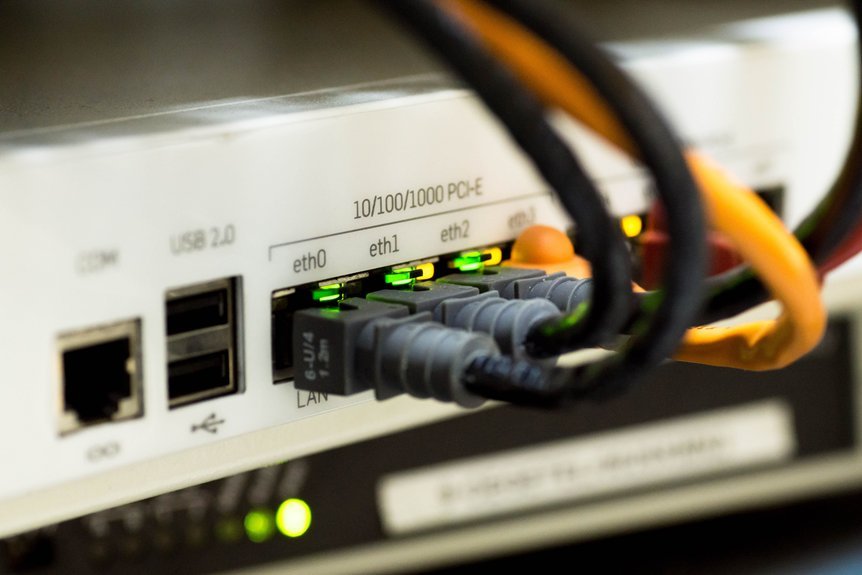
In the quiet hum of a network rack, 192.168.10.1 flickers as a misplaced beacon—an arrow aimed at a private lane yet cast into the public mapping, misrouting data bites. Reality settles: valid within its own subnet, invalid when misconfigured as a router address. A measured cadence of verification—ARP, routing tables, interface status—unmasks the error. Correct typos, align subnets, and let the true default gateway emerge, steady as a lighthouse through a sea of packets.