Newsletter Subscribe
Enter your email address below and subscribe to our newsletter
Enter your email address below and subscribe to our newsletter

 BySonu
This guide presents a precise sequence for accessing and securing the 1680.254 router. It covers initial login, firmware updates, and credential hardening, followed by network traffic safeguards and service mapping. Practical steps are outlined for optimizing Wi‑Fi performance and auditing logs. The approach emphasizes a structured diagnostic framework to address login or connectivity issues. The next steps reveal how these controls translate into a resilient, observable network posture that prompts further exploration.
To log in to the 1680.254 router, users should ensure they are connected to the router’s network either via Ethernet or a wireless connection, then open a web browser and enter the router’s default IP address (commonly 192.168.1.1 or 192.168.0.1) in the address bar.
login credentials and firmware updates are accessed through the administrative interface.
Network security should be addressed promptly after confirming login access, as foundational protections rely on a properly configured router interface. Quick security tweaks emphasize strong admin credentials, firmware updates, and disabled remote management. Map and monitor services, enforce segmented access, and audit logs. Acknowledge security myths and hardware quirks, documenting configurations to sustain resilient, freedom-loving network autonomy without unnecessary exposure.
Essential Wi-Fi optimizations focus on maximizing throughput and stability across the 1680.254 router’s wireless interface.
The guidance recommends disciplined channel selection, proper band steering, and consistent transmit power calibration.
Implement essential downtime planning for firmware tweaks and routine maintenance windows, ensuring minimal disruption.
Precise scheduling and configuration auditing support reliable performance without sacrificing control over network security or flexibility.
Common issues with accessing the 1680.254 router and establishing stable connections are addressed by a structured diagnostic approach. The analysis concentrates on communication protocols, authentication, and device compatibility. Systematic steps verify connectivity, reset procedures, and router logs. Firmware updates are evaluated for compatibility and performance impact, while correct cipher suites and port configurations prevent negotiation failures and ensure reliable login and sustained sessions.
Yes, one can change the router’s default admin username. This action supports security hardening, reduces exposure, and aligns with best practices. The procedure requires accessing admin settings, selecting a security tab, and applying a unique, strong identifier. Change completed.
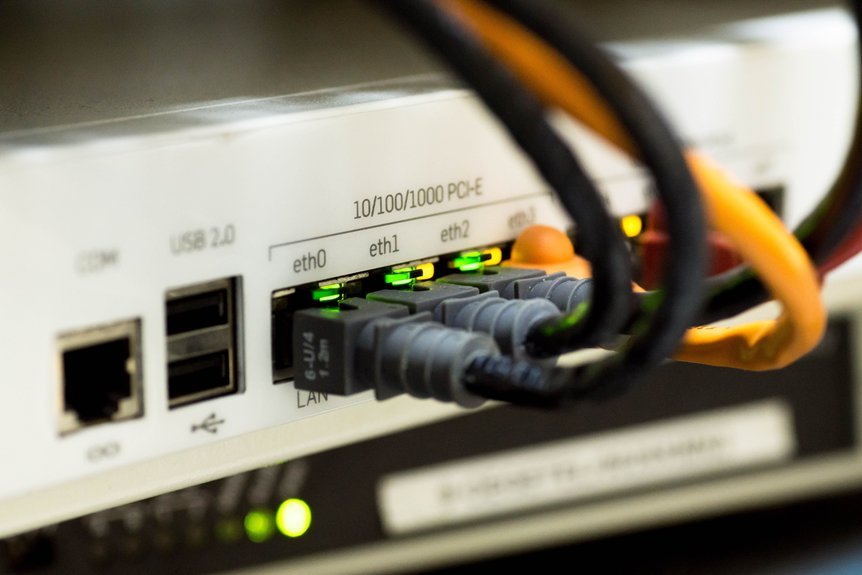
Hardware indicators alone do not certify failure; review LED states against the manual as part of troubleshooting steps. Quietly assess abnormal blinking, steady amber, or red signals for suspected hardware health, then consider feature feasibility and settings changes.
The reset procedure can restore factory defaults while preserving data; data preservation requires confirming file system integrity and performing backup steps beforehand. A cautious technician follows documented steps, ensuring power stability, then reevaluates configuration after reset.
Yes, the router supports guest network isolation. It enables device isolation and can enforce parental controls, preventing cross-network access between guests and local devices while preserving independent bandwidth and policy management for a freedom-seeking user.
Parental controls can be configured for individual devices. The system supports device-specific rules, allowing per-device schedules, content filters, and usage limits. Users should apply these settings to each device to ensure precise enforcement across the network.
In the grand theater of home networks, the 1680.254 router assumes the role of stern gatekeeper. With login rituals performed precisely, firmware updated on cue, and security settings tightened like a vault, the device dutifully preserves order. Yet, as channels oscillate and signals flirt with interference, one suspects a micro-dramatic aside: even flawless configurations crave maintenance. So, the observer notes, satire aside, that disciplined administration yields dependable connectivity—until the next firmware plot twist.